For decades, humanitarian and development actors have worked to set up or strengthen water, sanitation, and hygiene (WASH) systems across diverse contexts. Nevertheless, considerable barriers still exist to using market-based approaches at scale in the humanitarian WASH sector.
Key Market Systems
Hygiene Markets: Soap, hand washing stations, menstrual hygiene products, and other personal hygiene products
Water Supply Markets: Water containers, household water treatment, water trucking and/or piped water, bottled/treated water, chlorine products for water treatment, buckets with lids, water filters, hand pumps and spare parts, labor
Sanitation Markets: Latrine slabs, construction materials, desludging services, labor
Main concepts and trends
In recent years, humanitarian WASH actors have become increasingly market-sensitive and, when appropriate, provided support to WASH markets or used cash and vouchers (CVA) to deliver WASH assistance through local markets. The Global WASH Cluster (GWC) has expressed a commitment to scaling up the use of cash and market-based modalities to assist crisis affected populations wherever possible.
The GWC is also seeking ways to build the necessary capacity and experience in market-based programming to achieve sector objectives. Market assessments have begun to emerge in both emergency and long-term WASH programming – with CVA now frequently used to improve financial access to WASH goods and services, such as water, latrines, and hygiene items.
Market support modalities during emergency preparedness or response phases can be used in WASH programming to strengthen WASH-related market systems. For instance, supporting private or public water market actors (e.g. water kiosks or water utilities) can improve the capacity of local water market systems, including their infrastructure, and can have positive impacts on water availability and accessibility during and after emergencies.
CASE STUDY:
Social marketing for household water treatment
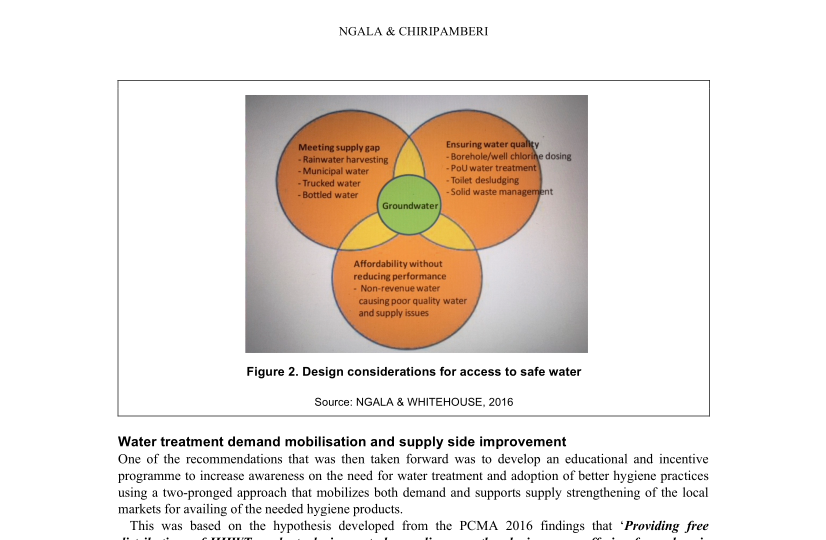
Following a pre-crisis market analysis (PCMA) in Zimbabwe in 2016, Oxfam designed a social marketing program for household water treatment, which both mobilized demand and supported local hygiene supply markets. They worked with the manufacturers of Waterguard (a water treatment chemical) to conduct a “Buy One Get One Free” campaign, with Oxfam subsidizing the cost of the water treatment. The campaign, in addition to connecting customers and retailers in terms of price, location and use of the product, also supported the reduced household purchasing power in the rainy season due to less work accessibility in those areas.