Markets are a key source of food and income for populations across the world. Food security and agriculture practitioners have a long and rich history of using market analysis to inform programming; and in many ways, food security has led the way with market-based programming, with approaches such as the Emergency Market Mapping and Analysis (EMMA) and value chain analyses.
Key Market Systems
Goods: Staple food crops, fruits and vegetables, fish, livestock, agricultural inputs
Services: Transportation to markets, agricultural labor, milling services
Main concepts and trends
All four pillars of food security (availability, access, utilization, and stability) are affected by market dynamics. The amount of food in a country or region, whether people can afford, harvest, prepare and consume it, and economic trends that determine the prices and quality of goods all impact a household’s access to sufficient, nutritious food.
As food assistance is a common response in humanitarian crises, there is a longer history of market-based programming in food security, compared to other sectors. Activities such as seed fairs, support to market actors such as producers and transporters, and advocacy around market system change in key food markets have subsequently risen in prominence.
In instances where conflict and disaster erodes the purchasing power of affected populations, and where markets are functioning and accessible, there is a preference to deliver food assistance through cash and voucher assistance (CVA). In addition, food security programming is increasingly looking beyond CVA, exploring a broader range of market support interventions in food systems.
CASE STUDY:
Reform of market policies: Mercy Corps in Liberia
During the Ebola crisis in Liberia, an assessment by Mercy Corps revealed that market activity had declined, negatively affecting household incomes. This was due, in part, to temporary government restrictions on markets, which intended to limit the spread of Ebola but which also contributed to increased food insecurity at the household level. Mercy Corps persistently and successfully lobbied the government to announce the reopening of markets to increase availability and quality of food items in the local markets.

CASE STUDY:
WFP Agricultural Markets Support Programme in Uganda
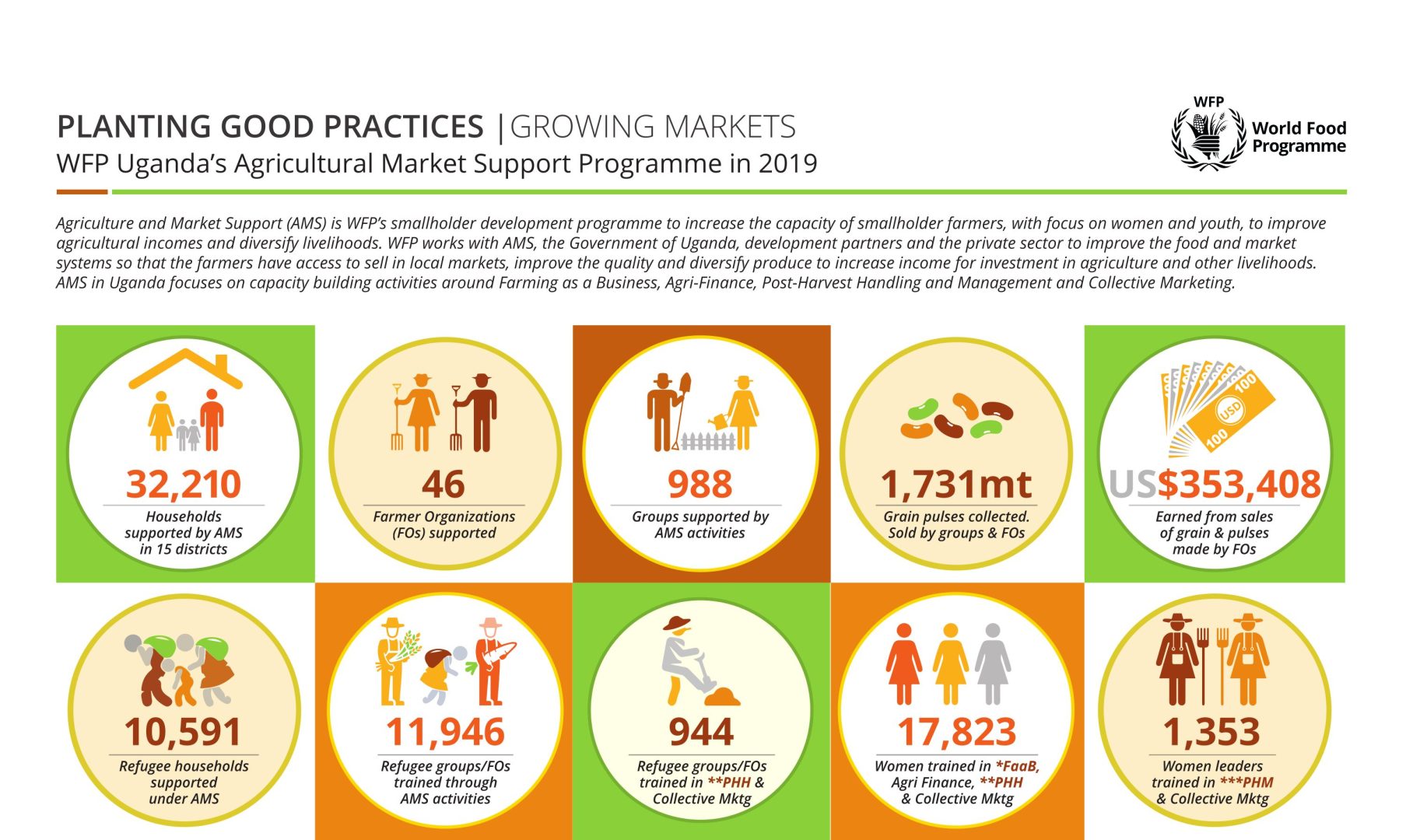
The World Food Program’s Agriculture and Market Support Programme (AMS) in Uganda aimed to increase the capacity of smallholder farmers, with a focus on women and youth, and to improve agricultural incomes and diversify livelihoods. AMS works with the Government of Uganda, development partners, and the private sector to improve food market systems with a focus on maize. AMS has supported 46 farmers organizations through targeted market support activities, such as agri-finance, post-harvest handling, and collective marketing. By the end of the program in 2020, 56% of groups had registered formally, 46% had negotiated warehouse access agreements, and 24% had opened bank accounts.