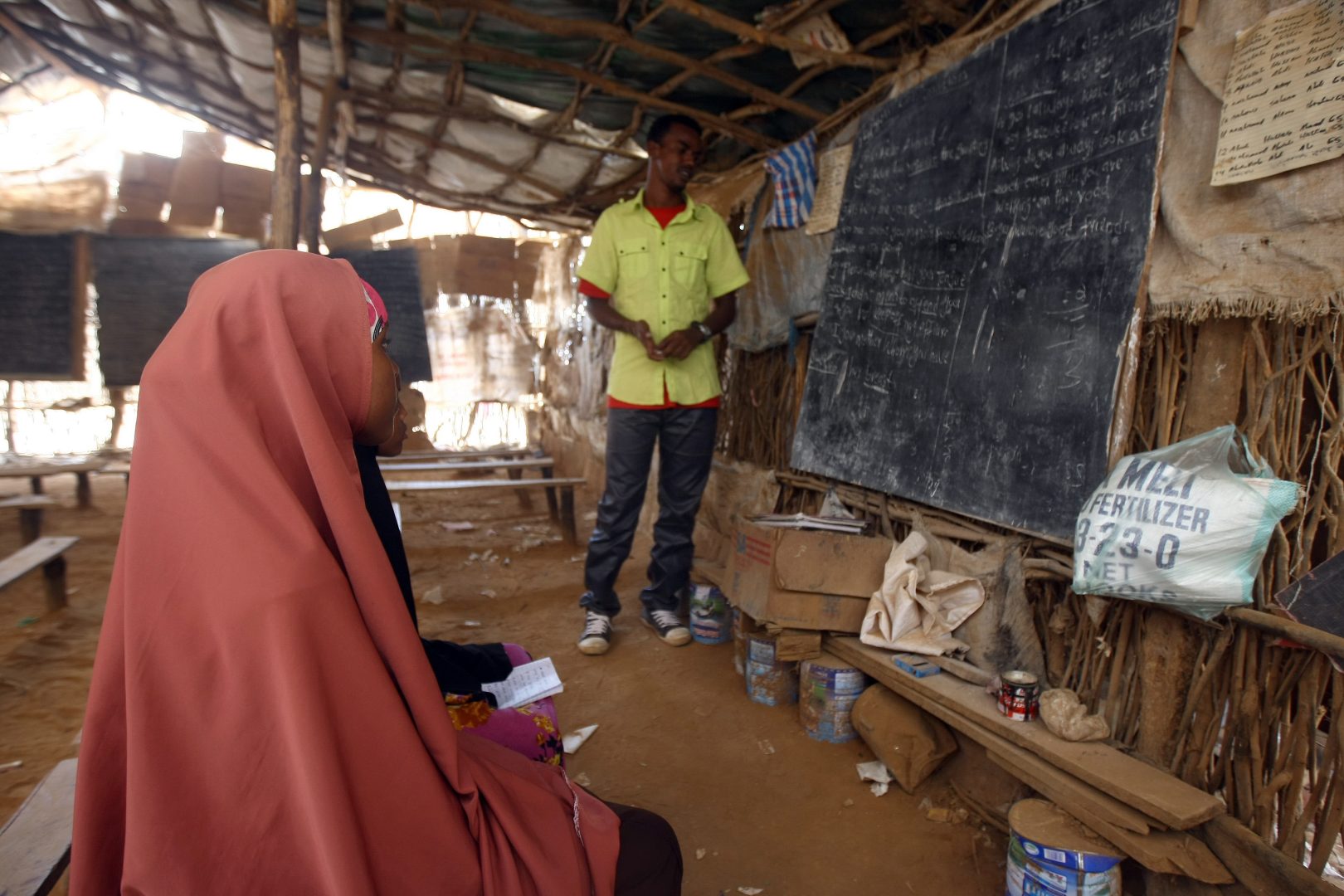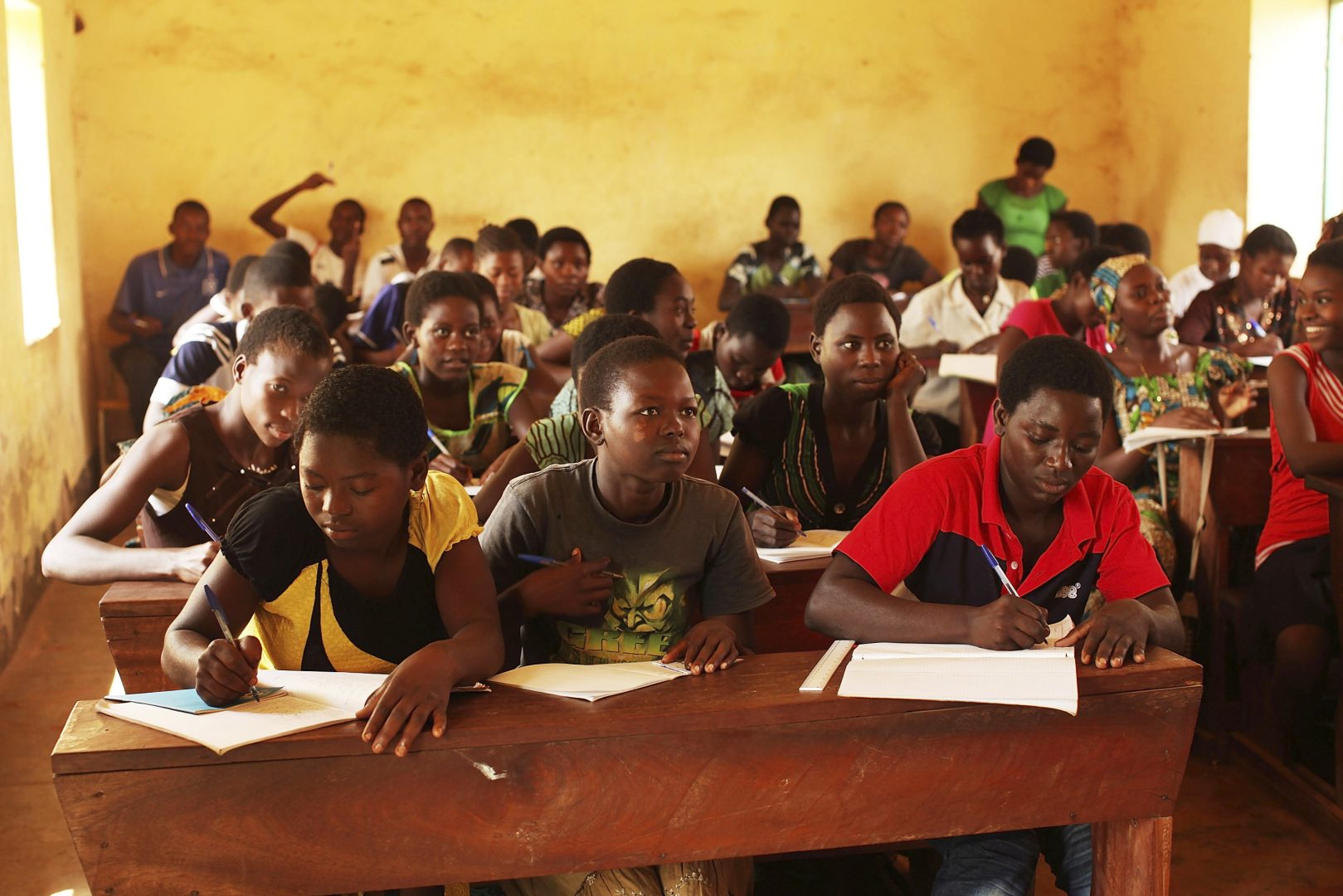
Education is largely considered to be a public good, and many education specialists are wary of the idea of treating it as part of a market system. Nevertheless, markets remain relevant to the sector as a means by which students and their families access key education supplies and material needed to enroll and attend school, as well as ancillary services.
Key Market Systems
Goods: School supplies such as notebooks, backpacks, pens, crayons; clothing such as school uniforms, shoes, and school bags.
Services: Transportation.

Main Concepts and Trends
Humanitarian actors typically work with the Ministry of Education and decentralized education authorities, to support and strengthen the education system. In emergencies, joint education needs assessments are used to evaluate the state of education services.
While market analyses in the education sector are not typical, basic education-related goods are increasingly included in joint market monitoring initiatives. Assessing education services, whether in humanitarian or development contexts, requires specialized technical knowledge.
Education and Cash & Voucher Assistance
Cash and voucher assistance (CVA) is an increasingly utilized approach, by humanitarian actors, to support access to and enrollment in education. Contextual factors such as the quantity and quality of available education services should drive which CVA modality is used. In fluid humanitarian emergency contexts where education services are weak and cannot be strengthened in a timely manner, multipurpose cash transfers (MPC) are usually preferred. In protracted contexts, where education services are in a better state or can be strengthened, sectoral CVA for emergency in education (EiE) is usually implemented.
CVA can contribute to achieving educational outcomes without necessarily requiring the provision of education goods and/or services. Evidence suggests that CVA in emergencies removes economic barriers preventing crisis affected children from accessing education, thereby leading to prevention of dropouts, increased enrolment, and attendance. Moreover, Conditional CVA is used to encourage education continuity to help prevent school age children to engage in child-labor or early and forced marriage.
Cash alone, however, is not sufficient to increase enrollment and education outcomes if other barriers such as protection, socio-cultural and education service barriers are not reduced or eliminated. CVA may be integrated, for example, into interventions that aim to improve access to legal documentation, expand the capacities for construction or rehabilitation of classrooms or temporary learning spaces, and provide mentoring and coaching support to teachers.
Case Study:
Education in Market Monitoring: Joint Market Monitoring Initiative in Somalia
In Somalia, a Joint Market Monitoring Initiative (JMMI) led by REACH, was established in 2020, with the aim of harmonizing market monitoring, avoiding redundancy in data collection, maximizing geographic coverage, and ensuring a regular and predictable output to inform cluster programming and cash responses.