With the rise of Market Based Programming (in particular CVA) comes a necessary evolution of guidelines and standards. Markets are now the focus of or mainstreamed across a variety of key documents which can support quality standards around program design, implementation and MEAL. The Humanitarian Standards Partnership (HSP) is a partnership and network of standard-setting initiatives. Its aim is to make humanitarian standards more accessible and actionable for aid workers, through growing coherence among the standards and joint promotion.
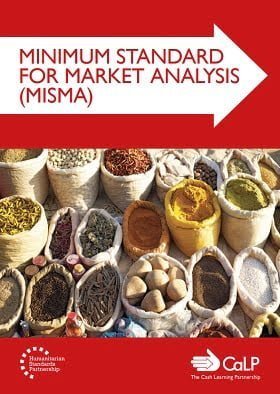
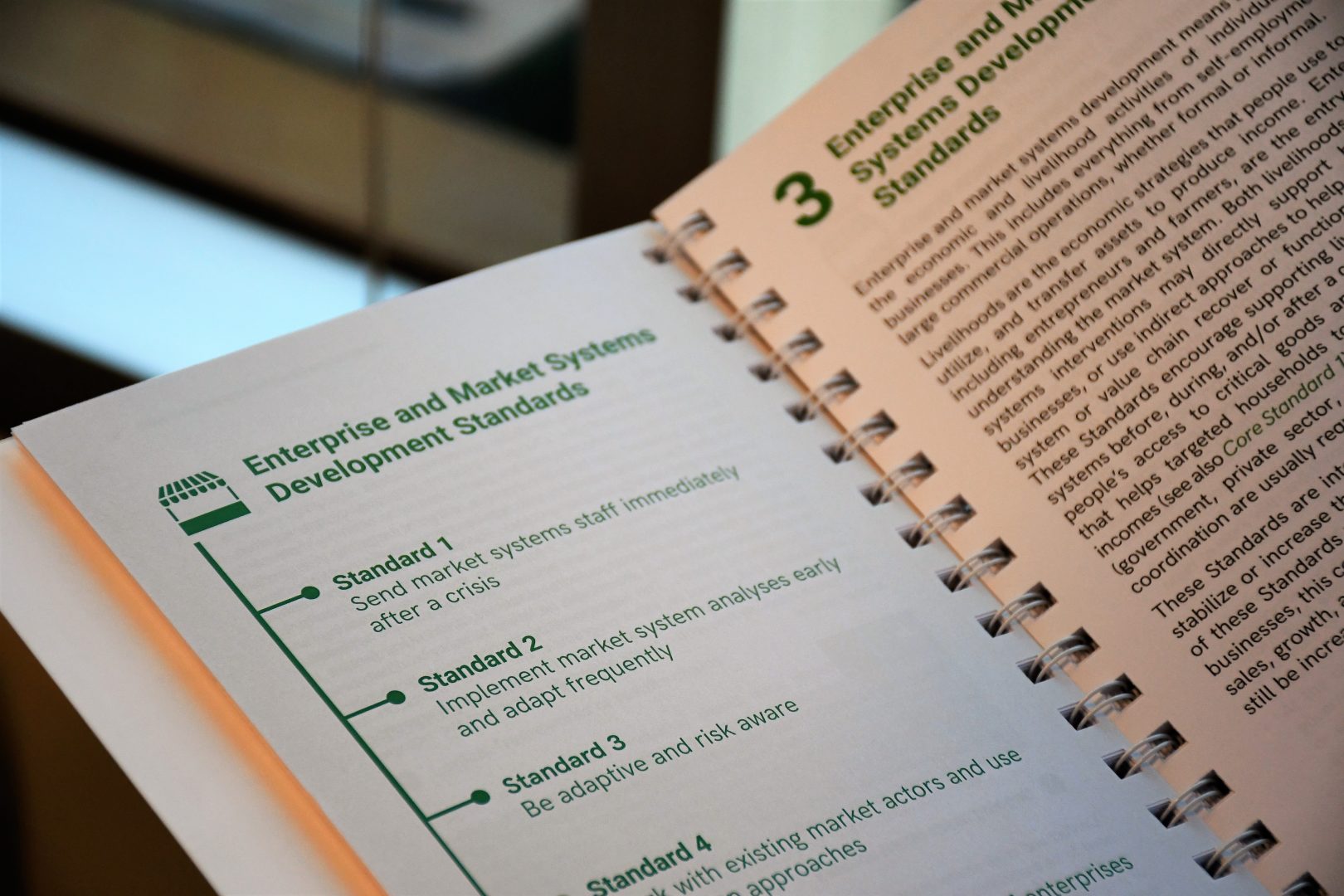
Today, the HSP includes 8 standards, covering over a dozen sectors – 5 of which focus on or include content on markets. The most well known of these is the SPHERE handbook which includes the HSP foundation texts and technical standards, however there are 4 other HSP handbooks which contain strong links to markets and market-based programming – the MISMA, MERS, LEGS and SEADS.

The SPHERE Handbook and Markets
The SPHERE Handbook 2018 notes that ‘not all assistance can be delivered through markets’ (e.g. some Health and Nutrition assistance) however ‘to determine the way in which assistance can best be delivered, consultations with the population, analysis of the markets, knowledge of the ways services are provided, and an understanding of the supply chain and logistics capacities will be needed’.
Three of the four technical chapters contains specific standards around using markets – Water Supply, Sanitation and Hygiene Promotion, Food Security and Nutrition and Shelter and Settlements. An appendix ‘Delivering Assistance Through Markets’ – was a new addition to the 2018 update and supports the foundation and technical chapters. The appendix outlines how market analysis should form a core part of response analysis, as well as providing checklists for cash based assistance and supply chain management and logistics.